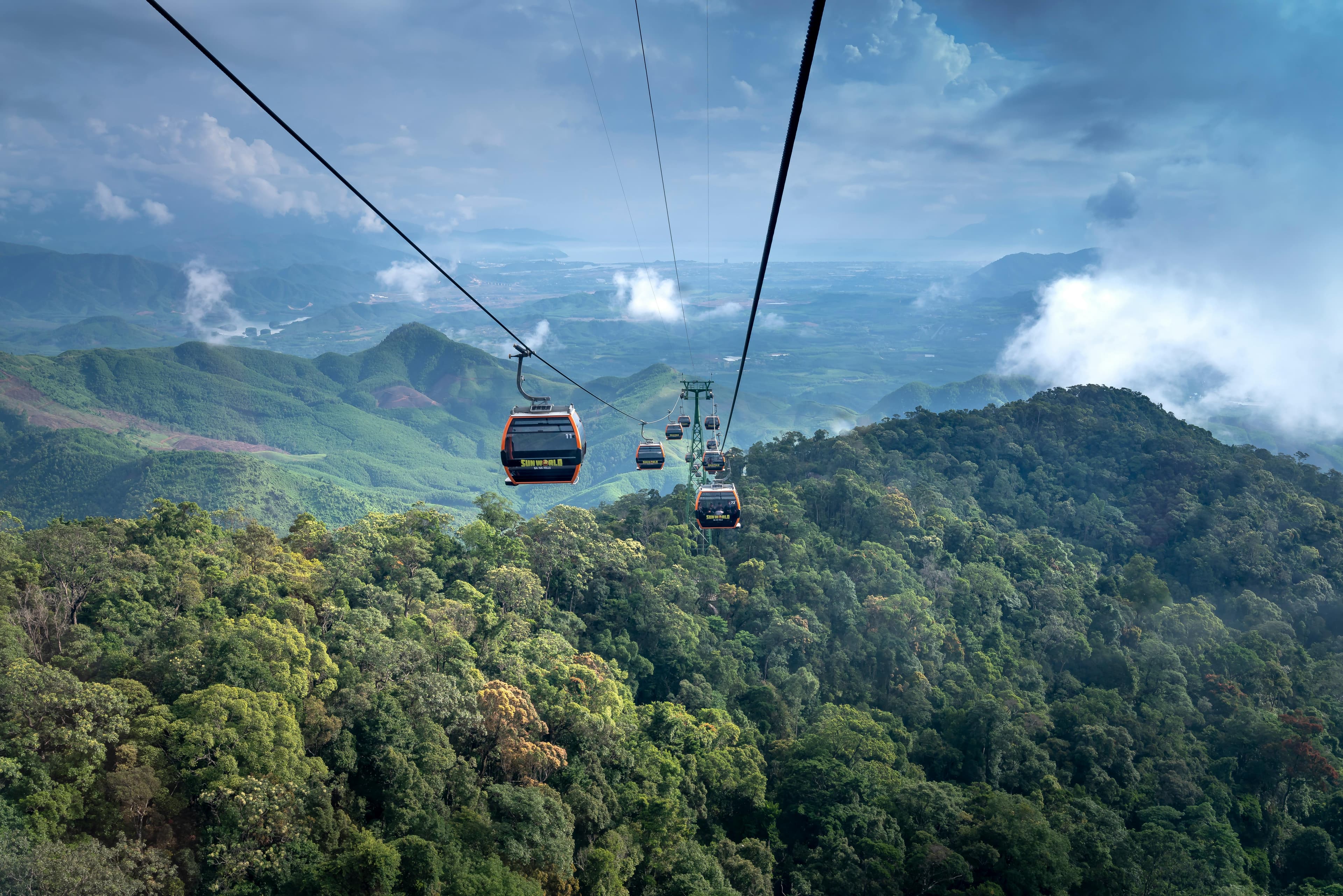
Aerial tramways, frequently categorized as reversible ropeways, remain a staple of alpine infrastructure. Unlike continuous-movement chairlifts or gondolas, these systems utilize a shuttle-like mechanism where one or two carriers move back and forth along a fixed track rope between two specific points. This design is particularly effective for crossing rugged terrain, deep valleys, or steep mountain faces where traditional intermediate lift towers are impractical.
According to data sourced from skiresort.info, there are currently 304 aerial tramways identified worldwide, with 289 currently in active operation. The prevalence of these systems is heavily skewed toward Europe, which hosts 263 of the global total. Switzerland leads the world in this category with 111 units, followed by Italy with 56 and Austria with 46.
The engineering behind these lifts continues to evolve. While the core mechanical principle remains consistent, modern iterations have seen significant upgrades. For instance, the Schmittenhöhebahn in Zell am See features cabins designed by the Porsche Design Studio, demonstrating how aesthetic integration is becoming as important as mechanical performance. Similarly, the Piz Val Grondabahn in Ischgl gained notoriety as the first aerial tramway to incorporate seat heating within its cabins.
Capacity management remains a primary consideration for operators. Systems like the 150er Tux in Mayrhofen demonstrate the high-volume potential of these lifts, boasting a capacity of 1,750 passengers per hour. As resorts look toward the future, many are opting to modernize older, smaller-capacity systems. A notable example is the upcoming transition in the Aletsch Arena, where a 45-person tram is slated to be replaced by a modern gondola system to improve efficiency and throughput.
Whether serving as the main arterial link to a high-altitude plateau, such as the Cabrio-Seilbahn in Tiers, or functioning as a vital transportation link between mountain villages, the aerial tramway remains an essential, albeit specialized, component of the global ski resort landscape.