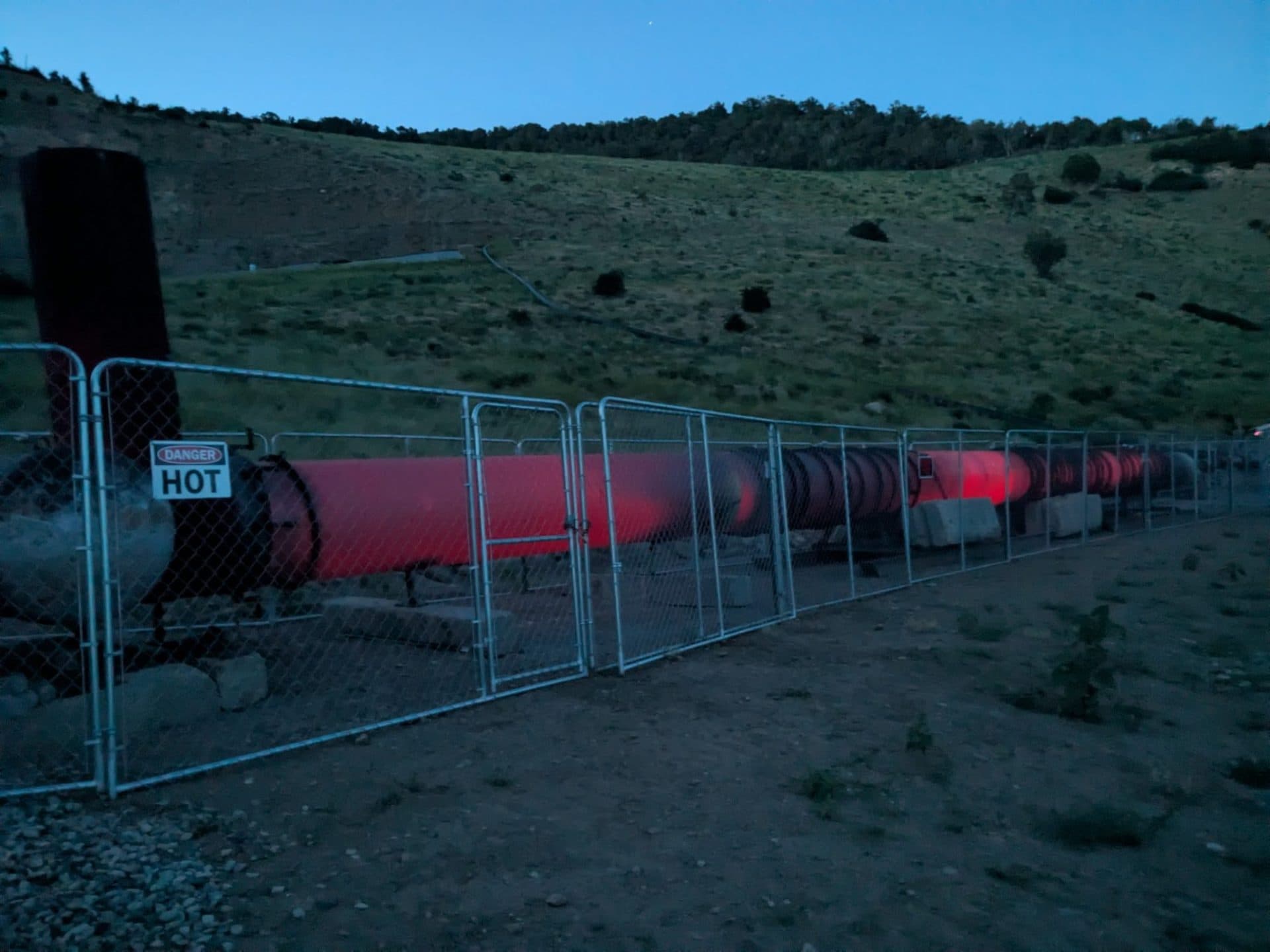
A startup founded by former employees of Aspen One is tackling a significant environmental challenge in Colorado’s North Fork Valley. Switchback Restoration, which includes a faculty member from the Colorado School of Mines, has taken ownership of the abandoned Bowie No. 1 Mine to mitigate the methane gas that has been leaking into the atmosphere since the site was sealed in 2004.
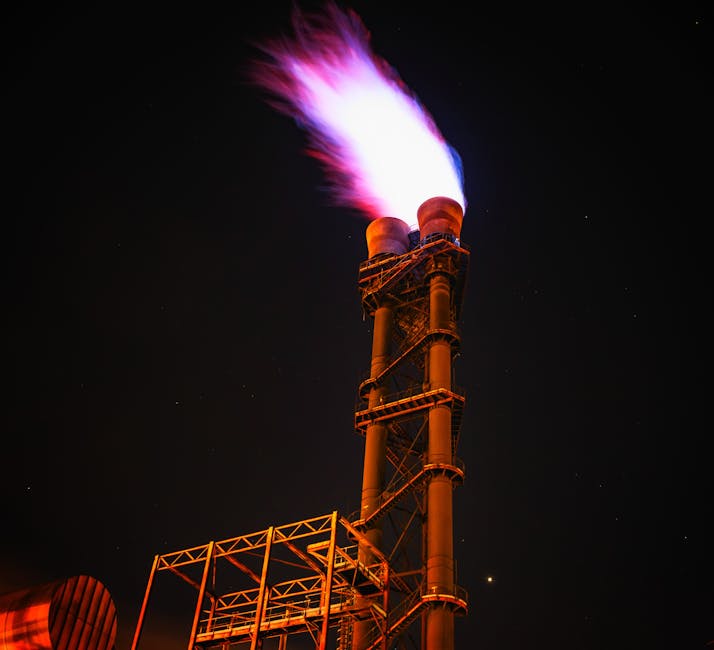
Methane is a potent greenhouse gas, contributing to approximately 30% of global warming. Because abandoned mines are often left unmonitored once ownership responsibilities lapse, these sites can become massive, unaccounted sources of emissions. Switchback Restoration aims to address this by piping the methane into a combustion tube where it is systematically burned.
While burning methane produces carbon dioxide, the process is considered a net positive for the climate. Methane is significantly more effective at trapping heat than CO2. By converting methane to CO2, the team reduces the immediate, intense warming impact of the leak. According to reporting by The Aspen Times, Switchback invested roughly $400,000 to acquire the land and an additional $1 million into drilling and equipment to facilitate this process.
The project draws inspiration from Aspen One’s earlier work at the Elk Creek Mine, which successfully converted methane into electricity starting in 2012. That project was highly effective, recouping 86% of its $5 million investment over a decade. However, Switchback Restoration has explicitly decided against electricity generation for the Bowie Mine site. The team notes that the high capital investment required for power plants is a barrier to scaling the work quickly across the dozen or more other methane-leaking mines in the region.
By utilizing the American Carbon Registry, Switchback generates emissions reduction credits from the destruction of the methane. This approach highlights a pragmatic philosophy in climate action: prioritizing immediate, scalable mitigation over more complex, energy-intensive solutions. As the group looks toward the future, they plan to expand these operations to additional sites, proving that imperfect but actionable solutions can play a vital role in addressing long-term environmental hazards.