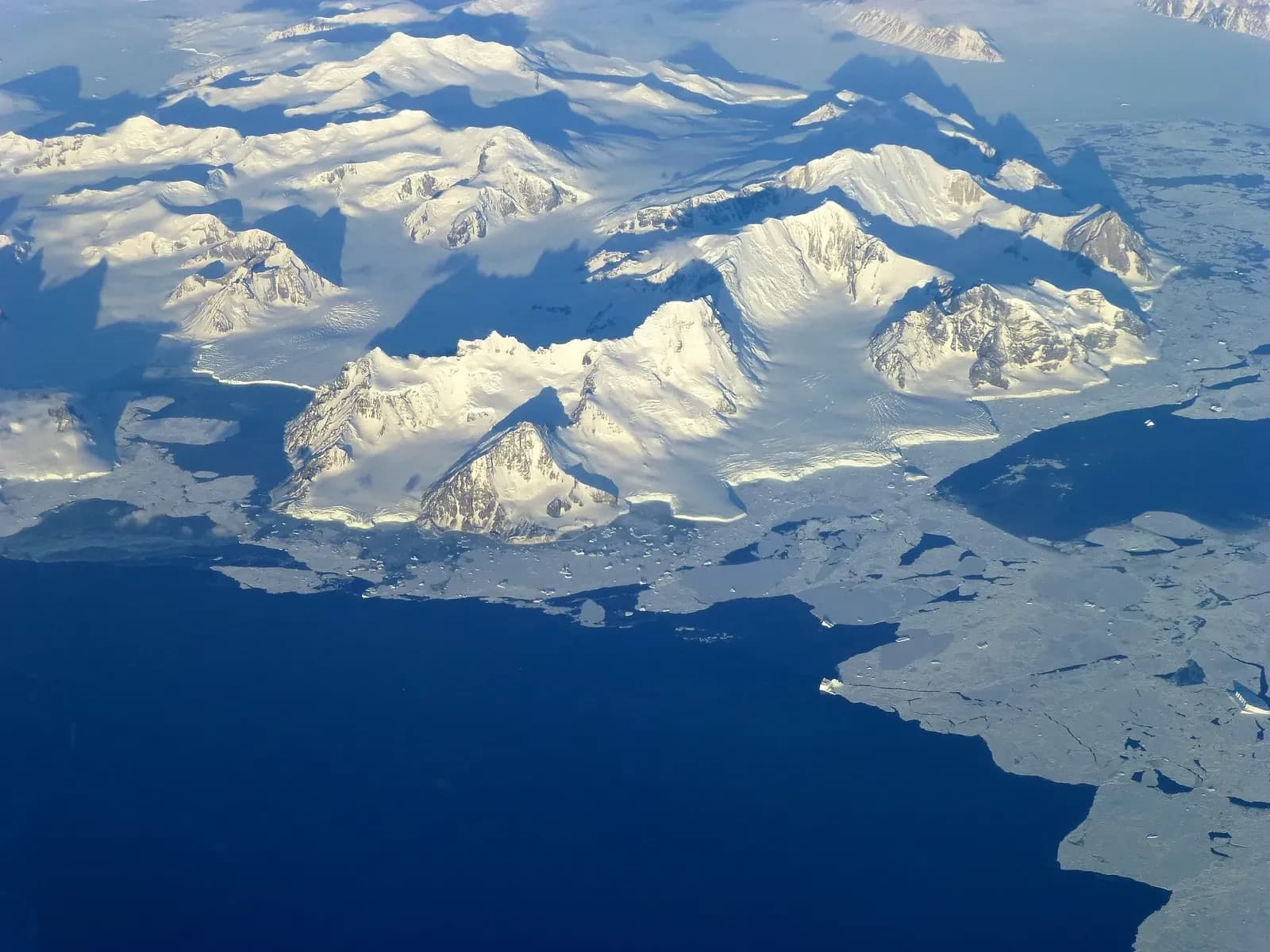
When we visualize Antarctica, most of us imagine a vast, flat, and featureless expanse of white. However, according to a recent report by Discover Wild Science, that perception is only skin-deep. Beneath the frozen surface of the continent lies a rugged, complex world that rivals the geological majesty of the European Alps.
The centerpiece of this discovery is the Gamburtsev Subglacial Mountains. This massive mountain range is located deep beneath the East Antarctic Ice Sheet. Despite its scale and jagged peaks, no human eye has ever seen them directly. The range is entombed under an immense layer of ice that reaches depths of four kilometers—roughly 2.5 miles—effectively hiding these giants from view.
Mapping the Invisible
Since the mountains cannot be observed by conventional means, researchers have turned to sophisticated remote sensing technologies to map the terrain. As detailed by the report, the primary tool for this effort is airborne ice-penetrating radar. By sending radio waves through the ice and measuring the echoes that bounce off the bedrock, scientists can piece together a high-resolution 3D map of the landscape.
This mapping process is bolstered by several other geophysical techniques:
- Gravity Measurements: These detect variations in density to locate the heavy rock formations that constitute mountain peaks.
- Magnetic Field Surveys: These provide essential geological data that has been preserved for millions of years.
- Isostatic Depression Analysis: Scientists account for the fact that the immense weight of the overlying ice has compressed the Earth's crust, meaning the mountains would likely rise even higher if the ice were removed.
A Window into Climate History
These buried ranges are not just geological curiosities; they serve as a critical archive for Earth's climate history. The topography of the Gamburtsevs dictates how ice flows across the continent. By identifying areas where ice has remained stable for over a million years, researchers can extract ancient air bubbles trapped in the ice, providing a record of past atmospheric conditions and greenhouse gas levels.
Furthermore, these mountains act as a guide for understanding future environmental changes. The ridges can anchor glacial movement, while the hidden valleys serve as conduits that channel ice toward the ocean, directly influencing models of sea-level rise.

Potential for Subglacial Life
Perhaps the most intriguing aspect of the Gamburtsevs is the potential for life in the dark. The report suggests that in certain subglacial basins, geothermal heat and pressure may keep water in a liquid state. These hidden lakes and channels could potentially host microbial ecosystems that have existed in isolation for eons, surviving on nutrients ground from the rock by the sliding ice above.
The existence of the Gamburtsev range reminds us that our maps are often incomplete. Beneath the Antarctic interior lies an ancient, hidden world that continues to exert a profound influence on the future of our planet.