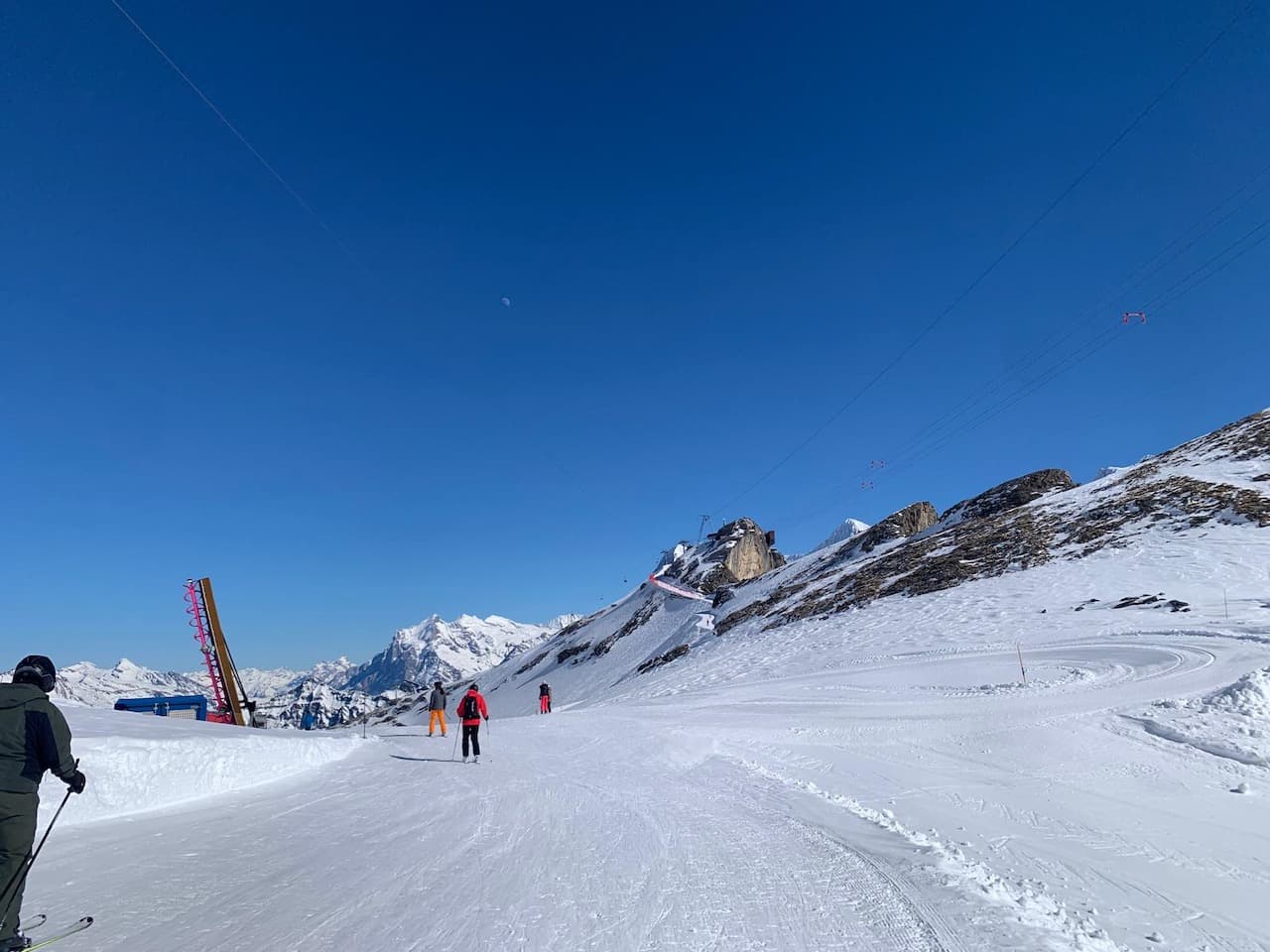
As the ski season transitions into spring, many winter sports enthusiasts are shifting their focus toward 'bluebird days.' Defined by bright sunshine, clear skies, and optimal visibility, these conditions have become a primary target for late-season travelers. According to data reported by PlanetSKI, interest in these conditions has surged, with Google searches for the term rising by 191% in the first quarter of 2026.
To assist skiers in navigating the late-season landscape, Inghams Ski conducted an extensive analysis of 120 resorts across 14 countries. By evaluating meteorological data including sunshine hours, snowfall, visibility, elevation, and temperature, the team calculated a 'Bluebird Day Score' out of 100.
Cervinia, located in Italy’s Aosta Valley, emerged as the leader with a score of 72.21. The resort is noted for its high-altitude terrain, which supports consistent snow conditions during the warmer spring months. Switzerland maintained a strong presence in the rankings, with St. Moritz (69.78) and Zermatt (68.34) taking the second and third positions, respectively. Both resorts are recognized for their historical significance and extensive, high-altitude piste networks.
The study highlights a clear preference for European destinations, with Swiss and French resorts dominating the top 15. Notable French entries include Les Arcs (5th), Tignes (11th), Alpe d’Huez (12th), and Les Deux Alpes (13th). In North America, Mammoth Mountain (8th), Lake Louise (9th), Sun Peaks (10th), Breckenridge (14th), and Telluride (15th) also secured spots, proving that high-latitude and high-elevation resorts globally remain viable options for spring skiing.
Laura Mason, Head of Destinations at Inghams, emphasizes that while weather is never guaranteed, data-driven planning can improve the odds of a successful trip. 'When planning a ski holiday, it’s important to look beyond just price and consider factors such as mountain elevation, season of travel, and historical sunshine hours,' Mason noted. She advises that higher-altitude resorts are generally better equipped to preserve snow and maintain clear conditions later in the season.
The research methodology utilized long-term climate averages from sources including SnowForecast and Google Weather. By weighting sunshine at 30% and other factors like snowfall and visibility at 20% each, the study provides a standardized look at which destinations offer the most reliable spring weather for skiers.